Macro tracker with a barcode scanner
Calories tell you how much energy arrived. Macros tell you what it arrived as — and for body composition, training and hunger, the second question is the more useful one.
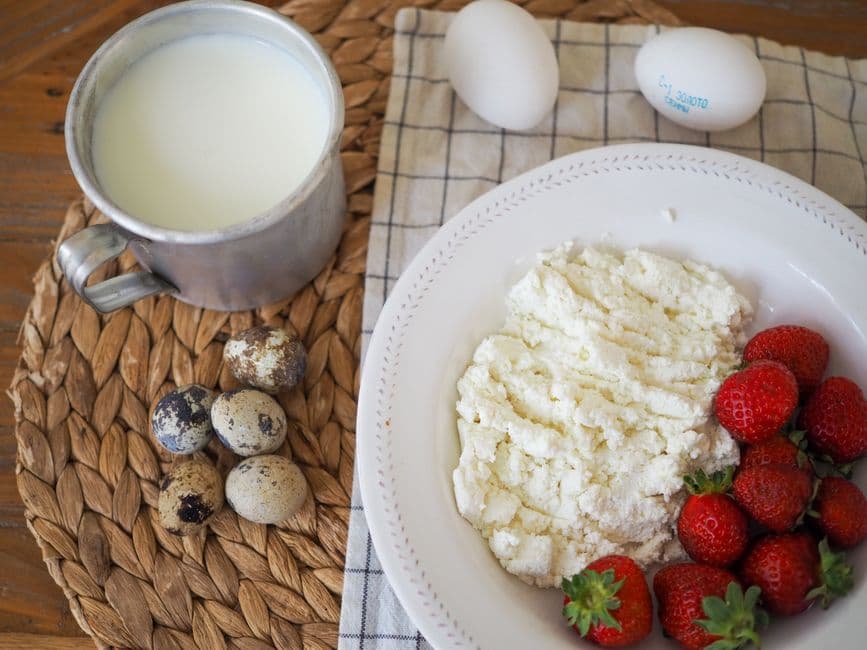
The three macronutrients
| Macro | Energy | Chiefly does |
|---|---|---|
| Protein | 4 kcal/g | Builds and preserves muscle; most satiating per calorie |
| Carbohydrate | 4 kcal/g | Fuels higher-intensity work; refills glycogen |
| Fat | 9 kcal/g | Hormone production, vitamin absorption, satiety |
Alcohol is a fourth at about 7 kcal/g, contributing energy and nothing else. It is worth logging precisely because it is easy to leave out.
Setting targets
Protein first
Set this before anything else, because it does the most work.
- Losing weight: around 1.6–2.2 g per kg of body weight. Higher within that range if you are lean, training hard, or in a steep deficit.
- Maintaining: 1.2–1.6 g per kg.
- Building muscle: 1.6–2.2 g per kg. Beyond about 2.2 there is no further benefit for almost anyone.
For an 80 kg person losing weight, that is roughly 130–175 g a day. Most people eat considerably less and find hunger the limiting factor — which is precisely what extra protein addresses.
Fat second
Set a floor rather than a target: at least 0.6 g per kg, or roughly 20% of calories. Below that, hormone production and fat-soluble vitamin absorption suffer. There is no benefit to driving it lower.
Carbohydrate takes the remainder
Whatever calories are left after protein and fat. Carbohydrate is the flexible one — it fuels hard training, and if you are not doing much of that it can be lower without consequence.
Worked example
An 80 kg person eating 2,000 calories to lose weight:
- Protein: 160 g × 4 = 640 kcal
- Fat: 60 g × 9 = 540 kcal
- Carbohydrate: the remaining 820 kcal ÷ 4 = 205 g
Which is 32% protein, 27% fat, 41% carbohydrate. The percentages are an output, not an input — starting from percentages is how people end up with a protein target that has nothing to do with their body weight.
Why scanning matters more for macros
Estimating calories from experience is possible. Estimating macros is not — there is no intuition for how many grams of protein are in a given piece of chicken, and there is no way to develop one.
Scanning gives you all three at once from the packet's own declared panel. That is the difference between macro tracking being feasible and being a spreadsheet exercise nobody sustains.
Hitting protein, which is the hard part
Fat and carbohydrate look after themselves. Protein does not, and almost everyone tracking macros for the first time discovers they are 40–50 g short.
Where it is usually missing:
- Breakfast. Cereal, toast and fruit is a near-zero-protein meal. Eggs, Greek yoghurt or skyr changes the whole day.
- Snacks. Crisps and biscuits contribute none. Yoghurt, cottage cheese, jerky or a shake contribute 15–25 g each.
- Vegetarian meals. Achievable, but it takes intent — lentils, tofu, tempeh, dairy and soy rather than assuming a plate of vegetables will get there.
A practical rule: aim for 30 g of protein at each main meal and let snacks make up the rest. That gets most people close without any further arithmetic.
How exact do macros need to be?
Within about 10 g a day on each is plenty. Chasing an exact number produces stress with no physiological return — total protein across the week matters, the precise split of a given day does not.
Timing matters less than people think too. Total daily protein is what drives muscle protein synthesis; distributing it reasonably across meals is a mild optimisation, not a requirement.
Scan your first meal free and see where the protein actually lands.
Try it yourself
Your first scan is free. No card needed.
Frequently asked questions
How much protein should I eat per day?
How do I set macro targets?
Do macros matter more than calories?
How accurate do macros need to be?
Keep reading
More calorie scanner guides
Calorie scanner app
What it does, and why it needs no install.
Read →AI calorie scanner
Photograph a plate, get the macros.
Read →Calorie barcode scanner
Point at a label, read the panel back.
Read →Food scanner for calories
Packaged, fresh and restaurant food.
Read →Nutrition facts scanner
The whole panel, not just the number.
Read →Free calorie scanner app
What costs nothing, and what does not.
Read →Calorie scanner online
Scan in a browser, no download.
Read →Free counter with barcode scanner
Counting without the subscription.
Read →kcal scanner
Metric labels, kJ and kcal together.
Read →Calorie counter with scanner
Scan, log, and watch the day add up.
Read →Calorie tracker with scanner
A diary that fills itself in.
Read →Food tracker with scanner
Meals, days and weekly patterns.
Read →Calorie calculator scanner
Portions, recipes and per-100g maths.
Read →Best apps with a barcode scanner
Eight scanners, honestly compared.
Read →MyFitnessPal barcode scanner
What went behind the paywall, and when.
Read →FatSecret barcode scanner
Free, ad-supported, and how it scans.
Read →Lifesum barcode scanner
Design-led tracking and its limits.
Read →MyNetDiary barcode scanner
The database-first alternative.
Read →Scan your first food in about ten seconds
Point the camera at a barcode, or photograph a plate that does not have one.
Scan a food free