How to Scan Food for Calories: A Practical Guide
·7 min read
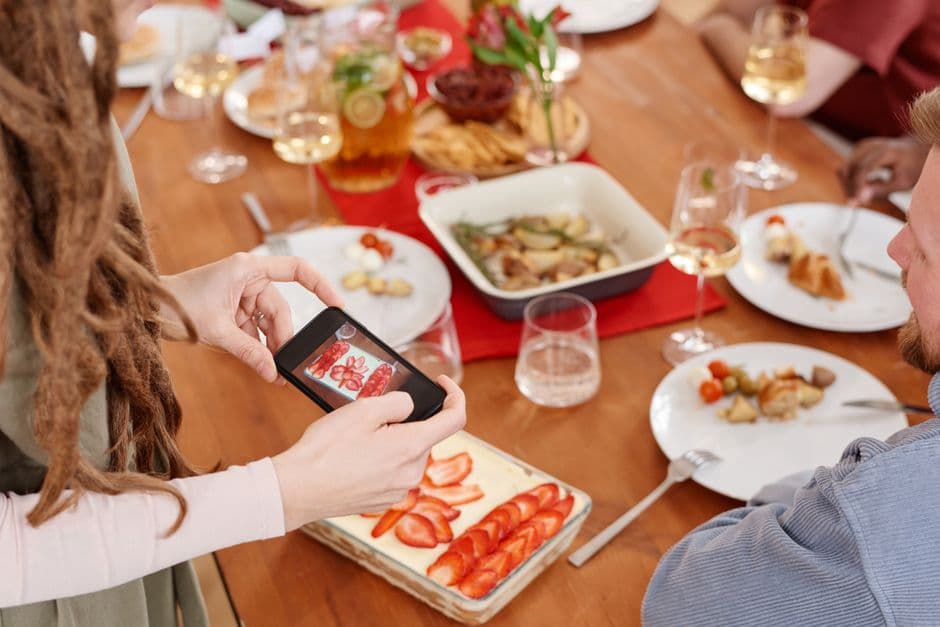
Scanning food is easy. Scanning it in a way that produces numbers worth having takes about five minutes to learn, and most of that is knowing which of three methods to reach for.
Step one: work out what kind of food it is
Everything falls into one of three buckets, and each wants a different tool.
It has a barcode. Scan it. You get the manufacturer's own declared panel — not an estimate of any kind. Always the best option when available.
It is a cooked meal or a restaurant plate. Photograph it. The AI estimates portion weights and derives macros from them.
It is fresh produce or a raw staple. Search by name. Standard reference values for unbranded foods are well established and more accurate than a photograph, provided you know the weight.
The common mistake is using one method for everything. Photographing a cereal box when the barcode is right there swaps a precise answer for an estimate.
Scanning a barcode well
Decoding fails for physical reasons, not software ones:
- Light it. The decoder needs contrast. A dim kitchen is the usual culprit.
- 10–20 cm away. Closer and autofocus gives up.
- Include the margins. Barcodes need clear space either side to be read.
- Flatten the curve. Rotate a tin so the code faces you squarely.
- Kill the glare. Tilt slightly off-perpendicular on foil and gloss.
Still nothing? Type the digits. Same lookup, ten seconds.
Then do the one thing that matters most: check the portion. The scanner defaults to the manufacturer's serving. If you are eating more, change it, and watch every figure update.
Photographing a meal well
Shoot at about 45 degrees. Straight down flattens everything and removes the depth cues used to judge volume.
Get a fork or a standard plate in frame. Scale is the hardest thing to infer from an image and the easiest for you to supply.
Photograph before eating. Obvious, and the most common mistake.
Add a note. One sentence for what the camera cannot see: "fried in butter", "rice underneath", "the bowl is large". This is worth more than any camera upgrade.
Spread things out. Overlapping items are estimated less well than separated ones.
The awkward cases
Restaurant meals. Check the chain's published figures first. For independents, photograph and add roughly 15% — restaurant cooking uses more fat than home cooking and most of it is invisible.
Deli-counter items. Barcodes starting 02 or 20–29 are shop-internal and encode a price. There is nothing to look up; search the food by name.
Drinks. Scan the bottle. Exact, and drinks are the most commonly forgotten calories.
Cooking oil. Measure it rather than pouring. A tablespoon is 120 calories and it does end up in the food.
Multipacks. Scanning the outer box may return figures for the whole box. Check the stated serving.
Making it a habit
Scan before you open the packet — once the wrapper is gone you are working from memory. Log as you eat rather than at bedtime. Build a favourites list, because most people eat the same forty foods and repeats should be one tap.
And log the days you would rather not. A diary missing its heavy days is not a record; because the skipped items are systematically the dense ones, its average is wrong in a predictable direction.
Two weeks in
The point of all this is not any individual number. It is the pattern that shows up after a fortnight: which meal runs heavy, how weekends compare, where the protein is missing. Those findings survive a 20% error easily, and they are what actually changes anything.
Open the scanner and start with whatever is nearest. For more depth, see the barcode scanner and AI scanner guides.
Keep reading